Does My Rust Nightly Have the New Trait Solver?
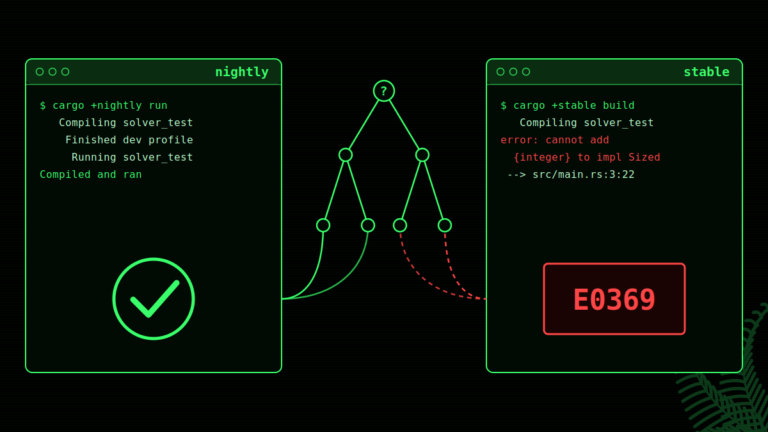
Rust switched on its biggest compiler change in a decade, but only on nightly. Here's how I proved my Debian desktop has the new trait solver, using one tiny program, three builds and zero guesswork.
Rust switched on its biggest compiler change in a decade, but only on nightly. Here's how I proved my Debian desktop has the new trait solver, using one tiny program, three builds and zero guesswork.
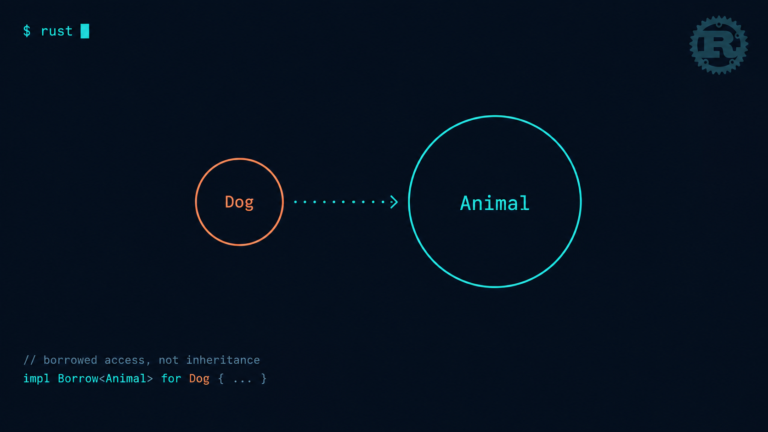
The setup Deref coercion is one of the most common “gotcha” questions in Rust interviews, because it’s genuinely easy to mistake for inheritance if you’re coming from Java or C++. This post is my working notes from testing it hands-on.…
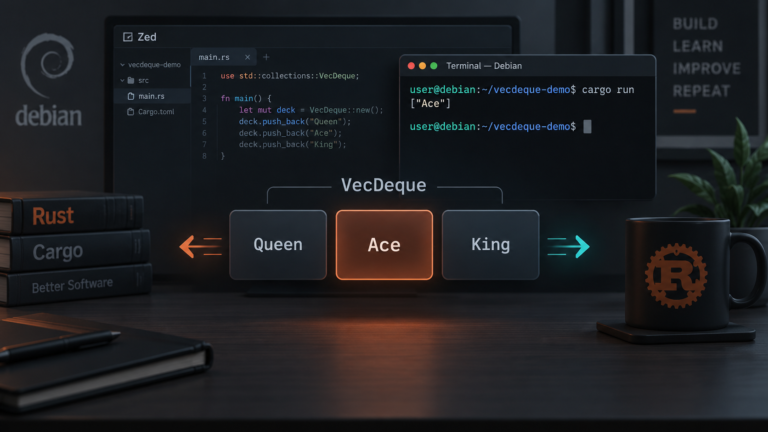
A word I heard as “deck” became a hands-on Rust lesson. Using Zed and Cargo on Debian, I practiced adding and removing cards at both ends of a VecDeque, corrected an editor-versus-terminal mix-up, and compared the code with Python’s deque.

I successfully completed a full workflow: creating data → saving to CSV → loading from CSV → building a sparse matrix → verifying it. Here's everything I discovered, including all my struggles and how I fixed them

Steve Klabnik spent 13 years on Rust's core team and co-wrote the book that taught most of us the language. Then, over 11 days in December 2025, he built Rue with Claude — a systems language that keeps memory safety but throws out Rust's hardest feature: the borrow checker. Here's the story, plus a cheat sheet for the syntax.

After watching My 2026 Rust Toolkit, I worked through the tools one by one on my Debian machine instead of blindly installing everything. From Clippy, Bacon, cargo-nextest, and cargo-generate to Serde, Rayon, Criterion, SQLx, Leptos, and more, this is my reference guide to what each tool does, what I installed, and what I want to explore next.

I added cargo-seek to my Rust toolbox and discovered an excellent terminal-based way to explore the crate ecosystem. From searching for Burn to inspecting versions, features, dependencies, and documentation, cargo-seek turns crate discovery into a fast, interactive TUI experience—all without leaving the terminal

Rustup gives you stable and nightly side by side — here's what the next-gen trait solver rewrite actually means, and a full rehearsal of the cargo-to-GitHub workflow, gh CLI install included, on Debian.

A broken npm symlink, a 400 from Claude extra usage, and a home directory full of every project on the machine. Then one repo, four tools, three commits.

Burn is a deep-learning framework written in Rust, not a PyTorch clone. This post is why the backend design matters—WGPU, tensors, and what that buys you off Python.